


Equipment
PIAB vacuum conveying of materials
Automated conveying of powdered and granular materials through a closed system.
How does vacuum conveying work?
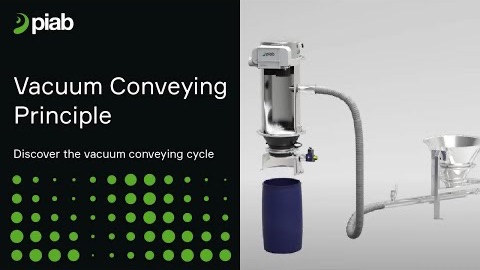
A vacuum pump creates negative pressure in the system, drawing the material along with an air stream through the conveying pipeline to the vacuum conveyor. In the conveyor the material separates from the air and is held above the discharge valve, while a filter stops dust from reaching the vacuum pump. At the end of the cycle the vacuum is released, the bottom valve opens and the material falls by gravity into the process equipment, after which a new cycle begins. The system can run fully automatically and integrate with PLC control, level sensors and other process equipment.
What can we convey?
Powdered raw materials
Flour, milk powder, cocoa, starch, powdered additives, pigments and other fine powders.
Crystals and granulates
Sugar, salt, plastic granulates, food granulates and other free-flowing raw materials with larger particles.
Pharmaceutical materials
Pharmaceutical powders, granules, capsules and other materials that need hygienic and controlled conveying.
Tablets and fragile products
Tablets, capsules, coffee, sweets and other products where breakage and damage during conveying must be kept to a minimum.
Chemical raw materials
Powdered and granular products of different density and flowability, including applications that may require an ATEX version.
Metal and specialty powders
Powdered materials for additive manufacturing and other specialty processes, including materials with a high bulk density. PIAB also lists the conveying of metal powders in 3D printing systems.
Hygienic and ATEX versions
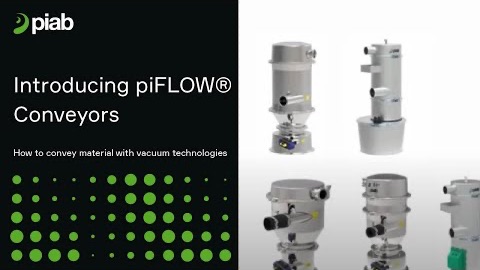
For food, pharmaceutical and other demanding processes, hygienic stainless steel versions with materials suitable for product contact are available. PIAB piFLOW®p uses ASTM 316L in the contact parts, is designed for easier cleaning and is available in versions for ATEX Dust and Gas areas.
Why vacuum conveying?
A closed process
Material is conveyed through a closed pipeline, reducing product spillage and the spread of dust into the work area.
Less manual work
Raw materials can be supplied automatically from sacks, containers or silos directly to the process equipment.
A flexible production layout
The pipeline can connect different heights and parts of the process without conventional mechanical conveyors.
Easy integration
The system can be connected to scales, level sensors, PLC control, mixers, sieves, fillers and other process equipment. As standard, a PIAB system consists of a pick-up point, pipeline, conveyor, filter, vacuum source and control, with optional extra components such as weighing, fluidisation and valves.
Videos
Videos open on YouTube.
Related solutions
Related industries


Would you like safer and more efficient load handling?
Tell us what you do today and how, and we will propose something with better ergonomics, higher productivity and a safer place to work.